What Congress disclosed, and what copying it would have returned
Every number here starts from the disclosure date, not the trade date. You cannot trade when they traded.
147 members of Congress ranked by what copying their disclosed trades would have returned, entering at the first open AFTER each filing. Top of the board: Mark E. Green, 34.2% a year over 6.2 years, against 17.1% for the S&P 500 over the same trades.
Entries are at the first open after the disclosure date, which is the earliest anyone copying could act; on average only 26% of the copying portfolio was in the member's own positions, the rest tracking the S&P 500. Disclosed amounts are bands rather than sizes, dividends are reinvested, and fees and taxes are not modelled. These are model outputs, not achievable returns.
Updated 2026-09-25
What copying each member’s filings would have returned, and how that compares with just holding the S&P 500.
 Mark E. Green R+17.1%per year vs the S&P, copying their filings
 James R. Langevin D+8.8%per year vs the S&P, copying their filings
 Dan Newhouse R+5.5%per year vs the S&P, copying their filings
| Member | Copied | Invested | Years | Return/yr | vs S&P/yr | What they got/yr | Median lag | Move |
|---|---|---|---|---|---|---|---|---|
| 1Mark E. GreenRTN · House+34.2%/yrcopying+37.1%/yrthey got26%invested | 45/63 | 26% | 6.2 | +34.2% | vs S&P/yr | +37.1% | 12d | — |
| 2James R. LangevinDopt 50%RI · House+24.6%/yrcopying+16.9%/yrthey got23%invested | 67/91 | 23% | 7.9 | +24.6% | vs S&P/yr | +16.9% | 28d | ▲ 1 |
| 3Dan NewhouseRWA · House+27.2%/yrcopying+14.9%/yrthey got63%invested | 100/101 | 63% | 3.3 | +27.2% | vs S&P/yr | +14.9% | 30d | ▼ 1 |
4 Jared MoskowitzDFL · House+28.2%/yrcopying+24.8%/yrthey got76%invested Jared MoskowitzDFL · House+28.2%/yrcopying+24.8%/yrthey got76%invested | 225/232 | 76% | 3.5 | +28.2% | vs S&P/yr | +24.8% | 36d | — |
5 Donald S. Beyer, Jr.DVA · House+19.6%/yrcopying+20.6%/yrthey got31%invested Donald S. Beyer, Jr.DVA · House+19.6%/yrcopying+20.6%/yrthey got31%invested | 258/286 | 31% | 6.8 | +19.6% | vs S&P/yr | +20.6% | 18d | — |
6 Dwight EvansDPA · House+18.5%/yrcopying+17.1%/yrthey got42%invested Dwight EvansDPA · House+18.5%/yrcopying+17.1%/yrthey got42%invested | 48/52 | 42% | 9.3 | +18.5% | vs S&P/yr | +17.1% | 37d | — |
7 Debbie Wasserman SchultzDFL · House+18.7%/yrcopying+18.1%/yrthey got11%invested Debbie Wasserman SchultzDFL · House+18.7%/yrcopying+18.1%/yrthey got11%invested | 15/26 | 11% | 10.2 | +18.7% | vs S&P/yr | +18.1% | 25d | — |
8 William R. KeatingDMA · House+16.8%/yrcopying+18.9%/yrthey got48%invested William R. KeatingDMA · House+16.8%/yrcopying+18.9%/yrthey got48%invested | 60/64 | 48% | 5.4 | +16.8% | vs S&P/yr | +18.9% | 40d | ▲ 1 |
9 Robert E. LattaROH · House+21.7%/yrcopying+21.3%/yrthey got32%invested Robert E. LattaROH · House+21.7%/yrcopying+21.3%/yrthey got32%invested | 19/21 | 32% | 4.2 | +21.7% | vs S&P/yr | +21.3% | 4d | ▲ 1 |
10 Cindy AxneDIA · House+16.5%/yrcopying+14.1%/yrthey got26%invested Cindy AxneDIA · House+16.5%/yrcopying+14.1%/yrthey got26%invested | 49/58 | 26% | 5.0 | +16.5% | vs S&P/yr | +14.1% | 345d | ▼ 2 |
11 Roger MarshallRKS · Senate+17.2%/yrcopying+14.3%/yrthey got9%invested Roger MarshallRKS · Senate+17.2%/yrcopying+14.3%/yrthey got9%invested | 11/23 | 9% | 8.1 | +17.2% | vs S&P/yr | +14.3% | 41d | — |
12 Nancy PelosiDopt 38%CA · House+16.1%/yrcopying+15.9%/yrthey got32%invested Nancy PelosiDopt 38%CA · House+16.1%/yrcopying+15.9%/yrthey got32%invested | 61/69 | 32% | 11.8 | +16.1% | vs S&P/yr | +15.9% | 21d | ▲ 9 |
13 John R. CurtisRUT · Senate+20.9%/yrcopying+18.5%/yrthey got41%invested John R. CurtisRUT · Senate+20.9%/yrcopying+18.5%/yrthey got41%invested | 59/68 | 41% | 6.5 | +20.9% | vs S&P/yr | +18.5% | 14d | ▲ 1 |
14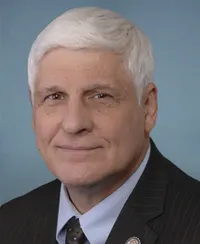 Bob GibbsROH · House+15.7%/yrcopying+16.0%/yrthey got42%invested Bob GibbsROH · House+15.7%/yrcopying+16.0%/yrthey got42%invested | 70/79 | 42% | 12.7 | +15.7% | vs S&P/yr | +16.0% | 4d | ▲ 3 |
15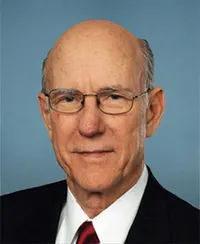 Pat RobertsRKS · Senate+15.9%/yrcopying+16.4%/yrthey got47%invested Pat RobertsRKS · Senate+15.9%/yrcopying+16.4%/yrthey got47%invested | 225/279 | 47% | 11.7 | +15.9% | vs S&P/yr | +16.4% | 22d | ▲ 9 |
16 Suzan K. DelBeneDWA · House+15.6%/yrcopying+14.4%/yrthey got15%invested Suzan K. DelBeneDWA · House+15.6%/yrcopying+14.4%/yrthey got15%invested | 55/66 | 15% | 12.4 | +15.6% | vs S&P/yr | +14.4% | 15d | ▲ 2 |
17 John H. RutherfordRFL · House+16.5%/yrcopying+14.8%/yrthey got27%invested John H. RutherfordRFL · House+16.5%/yrcopying+14.8%/yrthey got27%invested | 79/89 | 27% | 8.1 | +16.5% | vs S&P/yr | +14.8% | 399d | ▼ 2 |
18 Donna E. ShalalaDFL · House+20.0%/yrcopying+15.0%/yrthey got15%invested Donna E. ShalalaDFL · House+20.0%/yrcopying+15.0%/yrthey got15%invested | 92/127 | 15% | 6.4 | +20.0% | vs S&P/yr | +15.0% | 418d | ▲ 2 |
19 Dan CrenshawRTX · House+16.2%/yrcopying+21.9%/yrthey got18%invested Dan CrenshawRTX · House+16.2%/yrcopying+21.9%/yrthey got18%invested | 17/19 | 18% | 5.5 | +16.2% | vs S&P/yr | +21.9% | 37d | ▲ 3 |
20 Angus S. King, Jr.IME · Senate+16.0%/yrcopying+16.3%/yrthey got13%invested Angus S. King, Jr.IME · Senate+16.0%/yrcopying+16.3%/yrthey got13%invested | 32/33 | 13% | 8.8 | +16.0% | vs S&P/yr | +16.3% | 28d | ▼ 7 |
All 147 ranked members, 127 more than this page shows. Are free with an account
This page shows 20 of 147 ranked members: the top 20. A free account opens the full ranking, the disclosure feed, every member's page, and three members you follow, emailed the day each one files next. Pulse Premium adds the interactive backtest: any member, your position size, your exit rule, every entry on the disclosure date the filing went public, and follows without a limit.
Create a free accountor see what Premium adds- Entries are at the first open AFTER the disclosure date, the earliest any copier could act. The member's own entry was up to 45 days earlier.
- Disclosed amounts are bands, not sizes. Conviction sizing reads only where a band RANKS against the member's own earlier filings (a bigger-than-usual one takes a bigger slice of your portfolio, up to the ceiling you chose), so the run follows how hard they went in relative to themselves, never the dollars they actually committed or what those dollars were to them.
- Option purchases are copied as the underlying shares. A filing discloses no strike and no expiry, so an option cannot be mirrored; buying the stock is the closest a reader could get. It is 1.6% of all disclosed buys, but for some members it is a quarter to a half of everything they file, so their figure describes copying the filing rather than what the position itself did.
- Dividends are treated as reinvested (adjusted closes). Fees and taxes are not modeled.
- Positions are sized from equity at the time of each entry, so gains compound into later position sizes and only part of the account is in the member's positions at any time, the rest tracking the S&P 500. Read the drawdown next to the exposure figures: a portfolio holding only part of its equity in those positions shows a small whole-portfolio drawdown even when its holdings fell hard. Absolute returns are model outputs, not achievable returns.
- Past disclosures are no promise of future filings: members stop trading, leave office, or file late in batches.
These are the ranking’s own rules, so an untouched run reproduces the Members table. Change one and the run is yours. One member at a time; combining several into a basket is part of Pulse.
Why the disclosure date, and not the trade date
Members of the US Congress have to report their stock trades, and the filings are public. The part almost nobody mentions is the part that decides whether any of it is worth acting on: you cannot trade when they traded. You find out when the filing lands, up to 45 days later.
So every number here starts from the disclosure date, not the trade date. The backtest buys at the first opening price after a filing became public, because that is the earliest any real person could have acted on it. It is the less flattering way to run the numbers, and it is the only one that tells you what following a member would actually have done for you, rather than what the member got at a price you were never offered.
Why the disclosure lag is the whole story
Under the STOCK Act, a member has 30 to 45 days to report a trade. In practice the median gap between the trade and its disclosure is around 26 days, and roughly one filing in ten arrives late. A headline that says a member made 60% on a position is describing a return that started at a price no copier could reach.
That is why the ranking above is a copy-returnrather than the member’s own return, and why the two are different numbers, usually worse, sometimes much worse. It is the only version of the question that means anything to somebody deciding whether to follow along.
Follow a member, and hear about it the day they file
A backtest tells you how someone’s past disclosures would have treated you. The half that matters going forward is not missing the next one, and a filing is only useful in the days after it appears, which is exactly when nobody is watching the House Clerk’s website.
So the ranking and the alerts are one product rather than two. Follow any member in Pulse and you get an email as soon as a new filing of theirs is parsed: the trades in it, both dates, and how long they sat on it: “traded Jul 2, disclosed Aug 9, 38 days later”. The same disclosure date the backtest would have bought on is the one that triggers the email, so what you get alerted to is the thing you just tested.
What a disclosure actually contains
A periodic transaction report gives the member, the ticker, whether it was a purchase or a sale, the trade date, the filing date, and an amount band: “$1,001–$15,000” and so on, up to “over $1M”. The law never requires an exact figure. Nobody can tell you what a member actually put in, and any site that quotes a precise position size is filling in a blank the filing left empty. Trades by spouses and dependent children are covered too, and are included here.
Because sizes are unknowable, the ranking sizes every position the same way, so the comparison between members is about which trades they disclosed, not about a position size invented for them.
The strategy behind every number
Each member’s figure simulates one concrete, followable strategy: your money sits in an S&P 500 fund by default, and every time the member disclosed a buy, a slice of the portfolio moves from the index into that stock at the first opening price after the filing became public. The position is sold when the member discloses selling, or after one year, whichever comes first, and the money goes back into the index.
How big that slice is depends on how hard theywent in. A filing discloses a band, not a number, but a $1–5M purchase and a $1,001 purchase are plainly not the same conviction. So each buy is ranked against that member’s own earlier filings and sized between 1% and 20% of the portfolio, so their biggest-ever bet gets the top of that range, their smallest gets the bottom. Only filings they had already disclosed at the time count, so nothing is sized using information that did not exist yet.
Because idle money holds the index rather than nothing, the “vs SPY” column answers the only question that matters: did adding this member’s picks to an index portfolio beat just holding the index? A ranking that lets cash sit uninvested mostly measures the sitting; this one measures the picks.
The cost of sizing by conviction, stated because it is the kind of thing that gets left out: an account that commits more can run out of money and turn a later disclosure away. Where that happens to more than a tenth of a member’s entries, the count is printed above their figures. What survives a refusal is not a random sample of what they filed. Flat 1% never refused anything, but it also left the account almost entirely in the index, which flattered every “vs SPY” toward zero.
Where the data comes from
Almost all of it is read straight from the primary source: the House Clerk’s disclosure archive and the Senate’s electronic filing system, refreshed daily, going back to 2012, the year the STOCK Act made these reports a requirement. Electronically filed reports are parsed; the ones filed on paper are scans, and a scan is skipped and counted, coverage here is a number we can show you rather than a silent gap.
The exception, stated because it is the kind of thing sites leave out: a small share of older filings exist only as those paper scans, and for those we fall back to two public volunteer-transcribed datasets. That is roughly 2% of filings, every one of them tagged “mirror” in the feed, and our own read of a document always wins where we have one.
Every member with a page
One page per member with a meaningful disclosure history: their full filing record, both dates on every trade, and (where they clear the ranking’s own floors) what copying their disclosures returned. Ordered by how much we hold on them, which says nothing about how the copy-returns compare.
David Perdue · Josh Gottheimer · Gilbert Ray Cisneros, Jr. · Thomas MacArthur · Tommy Tuberville · Lisa C. McClain · Daniel S. Goldman · Susie Lee · Thomas R. Carper · Sheldon Whitehouse · Lois Frankel · Shelley Moore Capito · Greg Gianforte · Kevin Hern · Alan S. Lowenthal · Kathy E. Manning · Julie Johnson · Thomas R. Suozzi · Rob Bresnahan · Jefferson Shreve · K. Michael Conaway · Virginia Foxx · Donald S. Beyer, Jr. · John Boozman · April McClain Delaney · Marjorie Taylor Greene · Pat Roberts · Markwayne Mullin · Donna E. Shalala · Val T. Hoyle · Thomas J. Rooney · Kelly Loeffler · Alan Armstrong · Jared Moskowitz · Zoe Lofgren · Susan M. Collins · Lamar Smith · Ron Wyden · Jerry Moran · John James · David B. McKinley · Patrick J. Toomey · Pete Sessions · Katherine M. Clark · Pat Fallon · James M. Inhofe · Dean Phillips · Scott Franklin · Earl Blumenauer · Rick W. Allen · Julia Letlow · Chris Jacobs · Van Taylor · John H. Rutherford · Bill Cassidy · Bruce Westerman · John R. Curtis · Dan Newhouse · Cleo Fields · Tom Malinowski · Tim Moore · Jack Reed · Jonathan L. Jackson · David J. Taylor · Greg Stanton · James R. Langevin · Debbie Dingell · Carlos Curbelo · Richard L. Hanna · Scott H. Peters · John Hoeven · Marie Newman · Thomas H. Kean, Jr. · Dan Sullivan · Bill Flores · Lloyd Doggett · Gary J. Palmer · Greg Landsman · Patty Murray · Robert J. Wittman · Peter Meijer · Mikie Sherrill · John A. Yarmuth · Bob Gibbs · Michael C. Burgess · Suzan K. DelBene · Ritchie Torres · John W. Hickenlooper · Mark E. Green · David A. Trott · Nancy Pelosi · Dwight Evans · Richard McCormick · Blake D. Moore · Carol D. Miller · Thom Tillis · Bradley Scott Schneider · Byron Donalds · William R. Keating · Cindy Axne · Maria Elvira Salazar · Gary C. Peters · Rick Larsen · David P. Joyce · Rubén Hinojosa · Michael K. Simpson · Joe Courtney · Sheri Biggs · Angus S. King, Jr. · Lizzie Fletcher · Steve Cohen · Michael Guest · Daniel Meuser · J. French Hill · Ken Buck · Peter Welch · Ashley Moody · Raúl M. Grijalva · Gerald E. Connolly · Lou Barletta · Kelly Morrison · Ed Perlmutter · Ed Whitfield · Austin Scott · Debbie Wasserman Schultz · Tina Smith · Mitch McConnell · James Comer · Frank A. LoBiondo · Kathy Castor · Shri Thanedar · David E. Price · Jim Banks · George Whitesides · Michael A. Rulli · Susan A. Davis · Bill Hagerty · Sara Jacobs · E. Scott Rigell · Dan Crenshaw · Tammy Duckworth · Brian J. Mast · Roger Marshall · David McCormick · August Pfluger · Brad Ashford · William L. Owens · Nick J. Rahall II · Mo Brooks · Randy Neugebauer · Pete Ricketts · Lloyd Smucker · John A. Boehner · Katie Boyd Britt · Morgan McGarvey · Cheri Bustos · John J. McGuire III · Roger Williams · Robert E. Latta · Deborah K. Ross · Mike Garcia · Ed Case · Brian Babin · Michael G. Fitzpatrick · David Rouzer · Lindsey Graham · William R. Timmons IV · Victoria Spartz · Ron Estes · Justin Amash · Brenda L. Lawrence · Garret Graves · Barbara Comstock · Susan W. Brooks · Luis V. Gutiérrez · Grace Meng · A. Donald McEachin · Mark Meadows · John D. Dingell · Louise McIntosh Slaughter · Tom Rice · Harold Rogers (filings only) · Michael T. McCaul (filings only) · Ro Khanna (filings only) · John K. Delaney (filings only) · James B. Renacci (filings only) · Kurt Schrader (filings only) · Chuck Fleischmann (filings only) · David P. Roe (filings only) · Diane Black (filings only) · Doug Lamborn (filings only) · Kenny Marchant (filings only) · Ann Wagner (filings only) · Fred Upton (filings only) · Rodney P. Frelinghuysen (filings only) · Jared Polis (filings only) · Francis Rooney (filings only) · Diana Harshbarger (filings only) · Joseph P. Kennedy III (filings only) · Chris Collins (filings only) · Billy Long (filings only) · Trey Hollingsworth (filings only) · Curt Clawson (filings only) · Gus M. Bilirakis (filings only) · Tony Wied (filings only) · Tom Cole (filings only) · Tom Price (filings only) · Nicole Malliotakis (filings only)
A record of what was disclosed, not a signal service, not advice, and not a forecast.
What this is not
A member filing a purchase tells you what they bought and when it became public; it tells you nothing about why, and nothing about what happens next. Members leave office, stop trading, or file in late batches. The numbers here ignore taxes and any cost beyond the modelled fees.
See plans Or backtest a strategy free
Already have an account? Open Congress in Pulse.