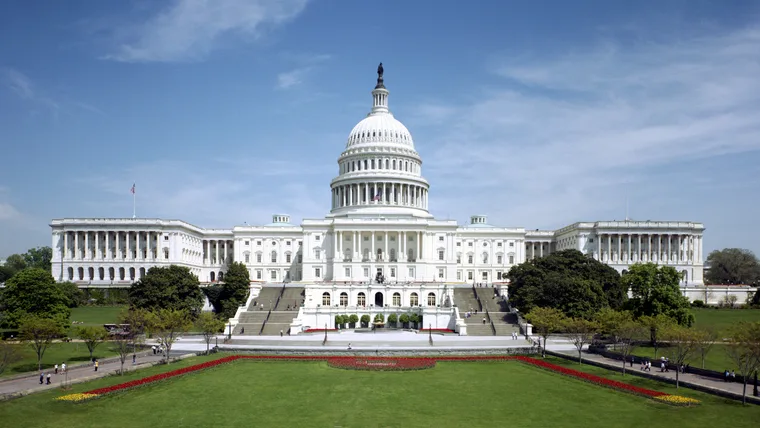
On 22 July 2026, the US House of Representatives passed the Stop Insider Trading Act (H.R. 7008) by 232–198, largely along party lines. Sponsored by Rep. Bryan Steil (R-Wis.), it is the furthest a congressional stock-trading ban has ever got.
It is the biggest change to congress stock trading rules since 2012, and also narrower than most of the coverage suggests, and the details matter, especially the one nobody is talking about, which would flip the information flow completely.
What the bill does
| Who it covers | Members of Congress, their spouses, and dependent children |
| Purchases | Banned outright |
| Existing holdings | May be kept, or sold |
| Selling | Requires 7 to 14 days of advance public notice |
| Penalty | The greater of $2,000 or 10% of the transaction value, plus any net gains realised |
| Excluded | Widely held investment funds (index funds, most mutual funds, diversified ETFs) |
The penalty change alone is significant. Under the current STOCK Act, filing a disclosure late costs $200, a fee small enough that one in five transactions misses the 45-day deadline. Ten percent of the transaction value plus disgorged gains is a different kind of number.
The part that inverts everything
Every congressional trade tracker that exists, ours included, is built on one structural fact: you find out afterwards. A member trades, and 28 days later on average the filing appears. You are always reading history.
This bill keeps that model for the buy side by removing it entirely: there are no more purchases to report.
But for the sell side it does something genuinely new. A member who wants to sell must give 7 to 14 days of public notice first. Not a report afterwards, a warning beforehand.
Think about what that means. If it becomes law, the public information about congressional trading stops being a stale record of purchases and becomes an advance schedule of sales. "Senator X intends to sell their position in Y sometime in the next two weeks" would be published before the sale happens. That is a fundamentally different signal from anything the STOCK Act has ever produced, and it's a strange thing for a transparency bill to create.
Whether that's a feature or an accident is above our pay grade. But anyone building or using a congressional trade tracker should understand that the bill doesn't just restrict the data. It reverses its direction.
What it doesn't do
- It isn't law. It passed one chamber. Sen. Pete Ricketts (R-Neb.) leads a Senate companion, but the path there is uncertain, and unrelated voter-ID language attached to the package complicates it further.
- It doesn't force divestment. A stricter earlier version required members to sell within 90 days; it stalled, partly over a demand that any ban also cover the president and vice president. This version lets existing portfolios stand indefinitely.
- It doesn't cover the executive branch. That disagreement is a large part of why previous attempts died.
- It doesn't touch funds. A member can still move money around widely held funds freely, which is most of what most members already do.
Is congressional stock trading currently illegal?
No, and this is the most common misconception, so it's worth being precise.
The STOCK Act of 2012 made explicit that members of Congress are not exempt from insider-trading law: they owe a duty of trust and confidence with respect to non-public information obtained through their official position. Trading on that information is illegal, and was before 2012 too.
Trading in general is not. A member buying a stock because they read a good earnings report is doing what any other citizen may do. The disclosure regime exists precisely because the legal line runs through the trader's knowledge and intent, which is close to unprovable from the outside, so the law settles for making the trades visible and letting the public judge.
That is why prosecutions are vanishingly rare while public suspicion is enormous. Both facts follow from the same design.
What this means if you follow congressional trades
Nothing immediately. The bill isn't law, the Senate is uncertain, and until something passes, the existing disclosure regime (30 to 45 days, $200 late fee, amount bands rather than exact sizes) continues exactly as it is.
If it does pass, the useful question changes from "what did they buy?" to "who has announced they're about to sell?" We'll cover that if and when it happens.
In the meantime, the honest way to evaluate any of this is to measure it rather than argue about it: what copying Congress actually returned, entering at the first price available after each filing became public, because that is the only price a member of the public was ever offered.
Sources
- H.R. 7008: Stop Insider Trading Act, 119th Congress
- Roll Call: Congressional stock-trading bill passes the House
- CNBC: House advances bill barring sitting Congress members from buying stocks
This is an explanation of pending legislation, not legal or investment advice. Bill provisions can change in the Senate.